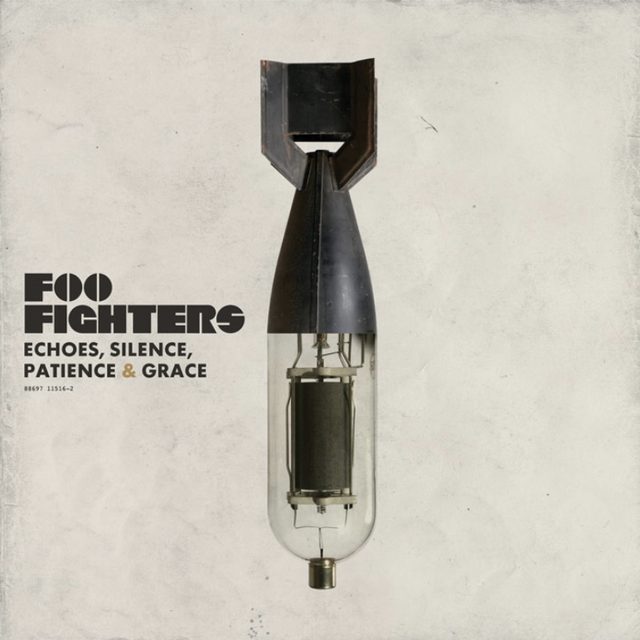
I want to talk to you about Brand New's 2003 album, Deja Entendu.
Specifcially, the album cover art.
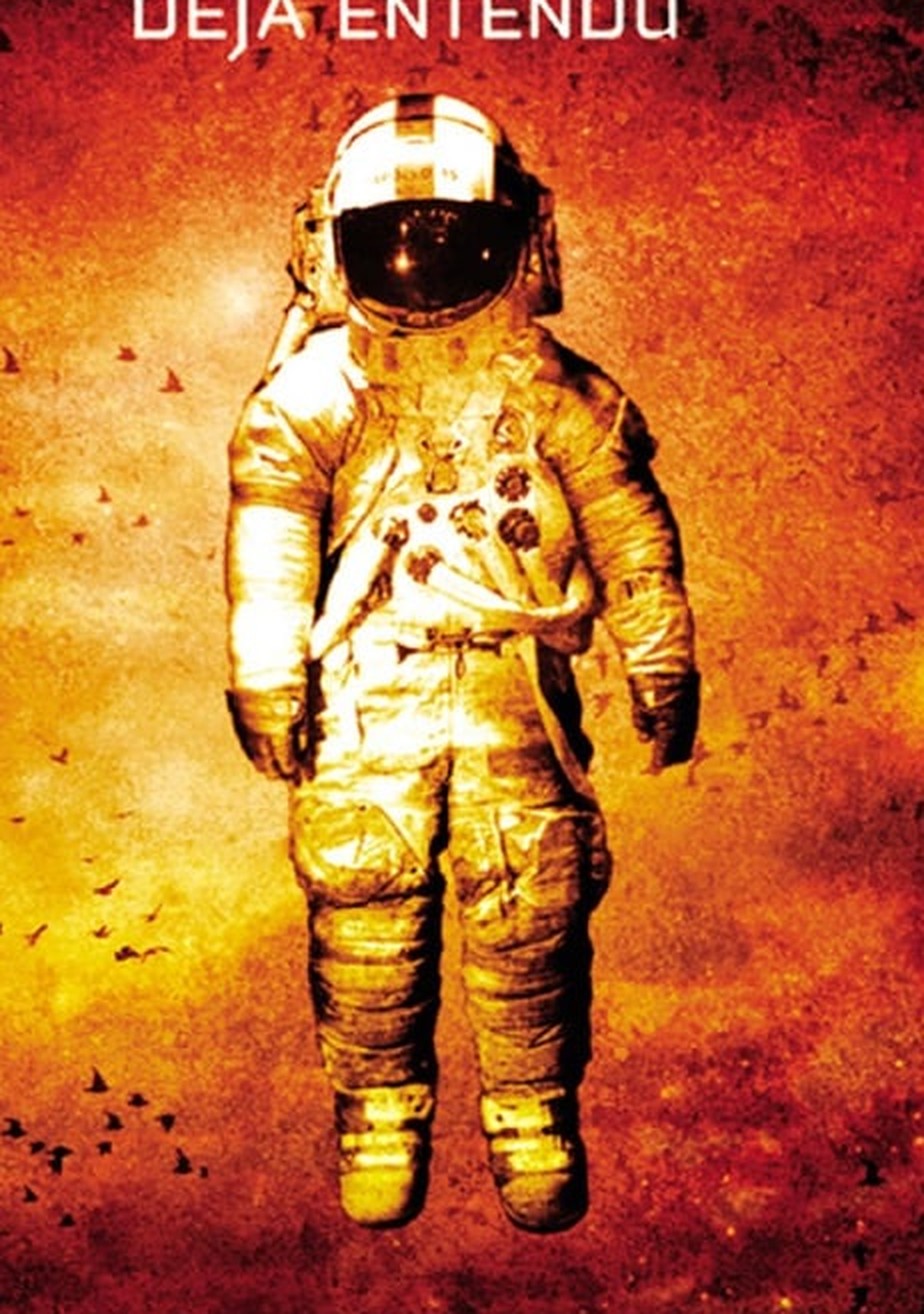
A lone astronaut, floating in a red sky above a sea of dark waves.
For years, I kinda just assumed this was an illustration like a drawing or maybe, at best, a generic representation of some sort of astronaut.
It isn’t anything like that.
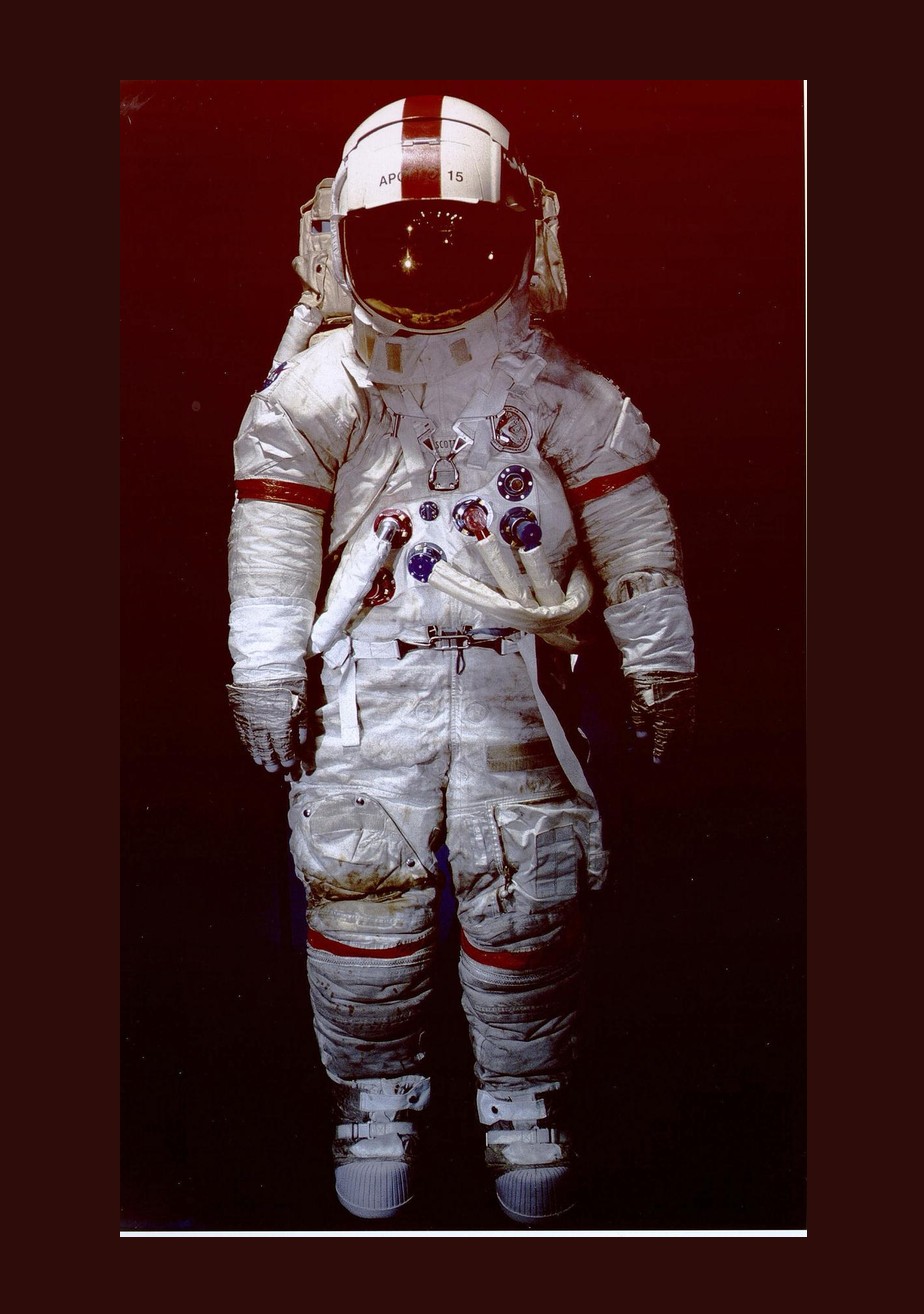
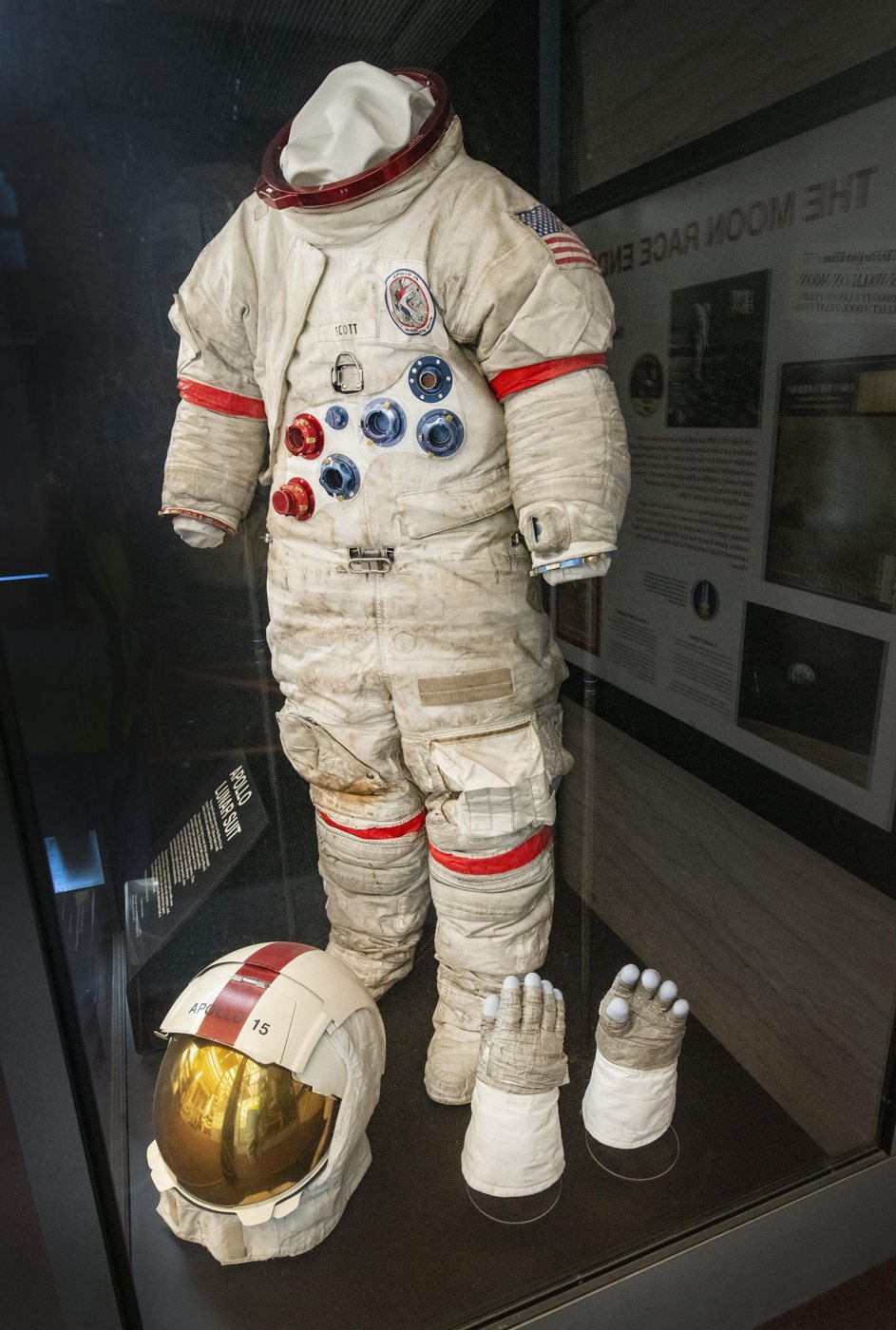
Instead it’s an actual photograph of, not just ‘some’ spacesuit, a real pressure suit, draped over a mannequin stand, collecting dust in a Smithsonian storage room.1
And this particular suit it didn’t belong to just some random space cadet, either.
It specifically belonged to one Commander David R. Scott. He wore this exact suit on Apollo 15 from where he was shot into space and wore it on the surface of the Moon for 67 hours in the summer of 1971.1
When I say it's an exact match, I mean exact.
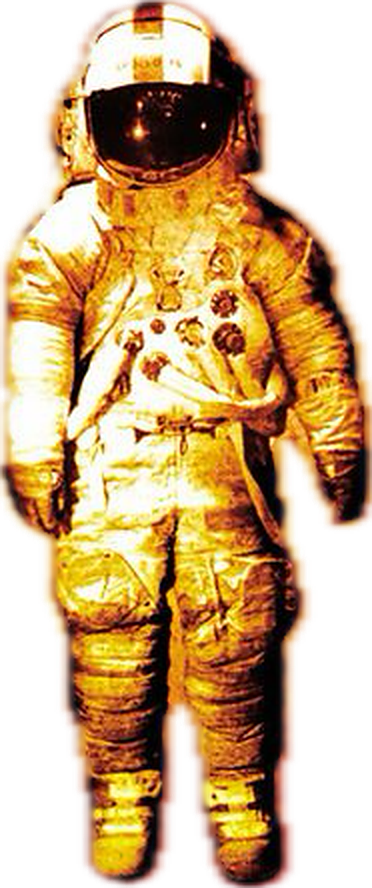
Look at the Smithsonian’s catalog photo of the suit on the right side-by-side with the album cover on the left. You can see them together. Point for point exactly.
Look at the visor. See those three bright white spots? They aren’t stars. They’re studio lamps reflecting off the gold coating. Same spots in both pictures.
See the red stripes painted on the arms, the legs and the helmet?
NASA started doing that after Apollo 13, just so the guys back in Houston could tell the two moonwalkers apart in the grainy television feeds.3
Check out the chest. Six anodized metal connectors arranged in two triangles. Two red, four blue, for water, oxygen, and power.
There is only one (1!) suit in the entire Apollo program used this specific layout. This one.3
It's in the knees too. The same exact creases. Those creases are a souvenier, brought home from outer space.
The Smithsonian photographer shot the suit against a dark red backdrop. When the Clark brothers, who designed the album cover, found this image, it seems they might have just deleted the studio floor and kept the red tones. They took a static museum object, made it weightless again, setdrifting over rouge waves, traveling fast and alone.
But to understand why this specific suit is so unique, we have to go back to a NASA design meeting in the late 1960s, where designers had to answer a brand new question: ‘How can we get an astronaut to sit down in a spacesuit?’
Up through Apollo 14, astronauts wore a suit called the A7-L.
They had to get into the suit through a zipped up opening in the back.
The torso itself was rigid. It couldn't bend at the waist3 which was totally fine, until NASA decided that for their last three missions to a dusty barren rock, they were bringing a car.
A car to drive on the Moon.
Which sounds cool i guess, until you realize an astronaut at this point couldn't sit in a car in a suit that only bends at the shoulders and hips.
Someone had to design it. And not just someone, many people.
People that know about space stuff and know how to translate concepts into drawings have to come together and over thousands of crumpled papers shot into wastebaskets, doodling over doodles, pasting cutaways and iterating sketches to create something out of an idea.
Not so different to other kinds of designers. Say for examples, designers of album covers? But we'll get back to that part.
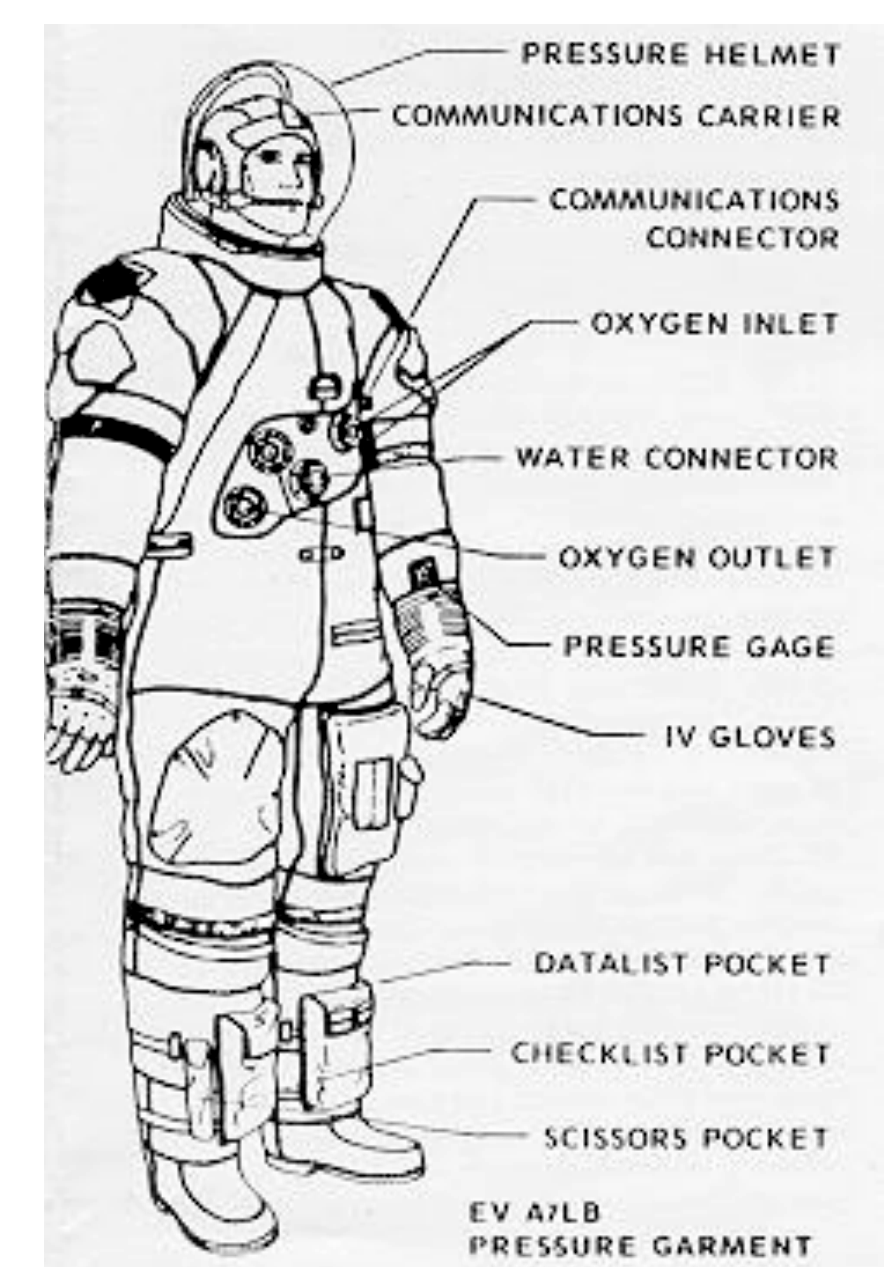
Doing this, designers at ILC Dover, the company that had been hand-sewing spacesuits since the program began, built a new model of spacesuit: the A7-LB.
They added a rubber, cable-restrained bellows joint at the waist and a new ring at the neck. Just so a person could sit in a car and turn his head.2
A simple enough task happen but heavy engineering and design systyems had to come together to make happen.
26 layers of Beta cloth, Chromel-R, nylon, Mylar, and neoprene.1
78 pounds on Earth but 185 lbs once you strapped on the life-support backpack.1
The thermal layers worked, "on the same insulation principle as a Thermos bottle."2
The gold visor was built as a mirror to bounce solar radiation away from the astronaut's face.2
All those layers. All of that math and sewing and testing. Brought into existence because somebody needed to drive a car.
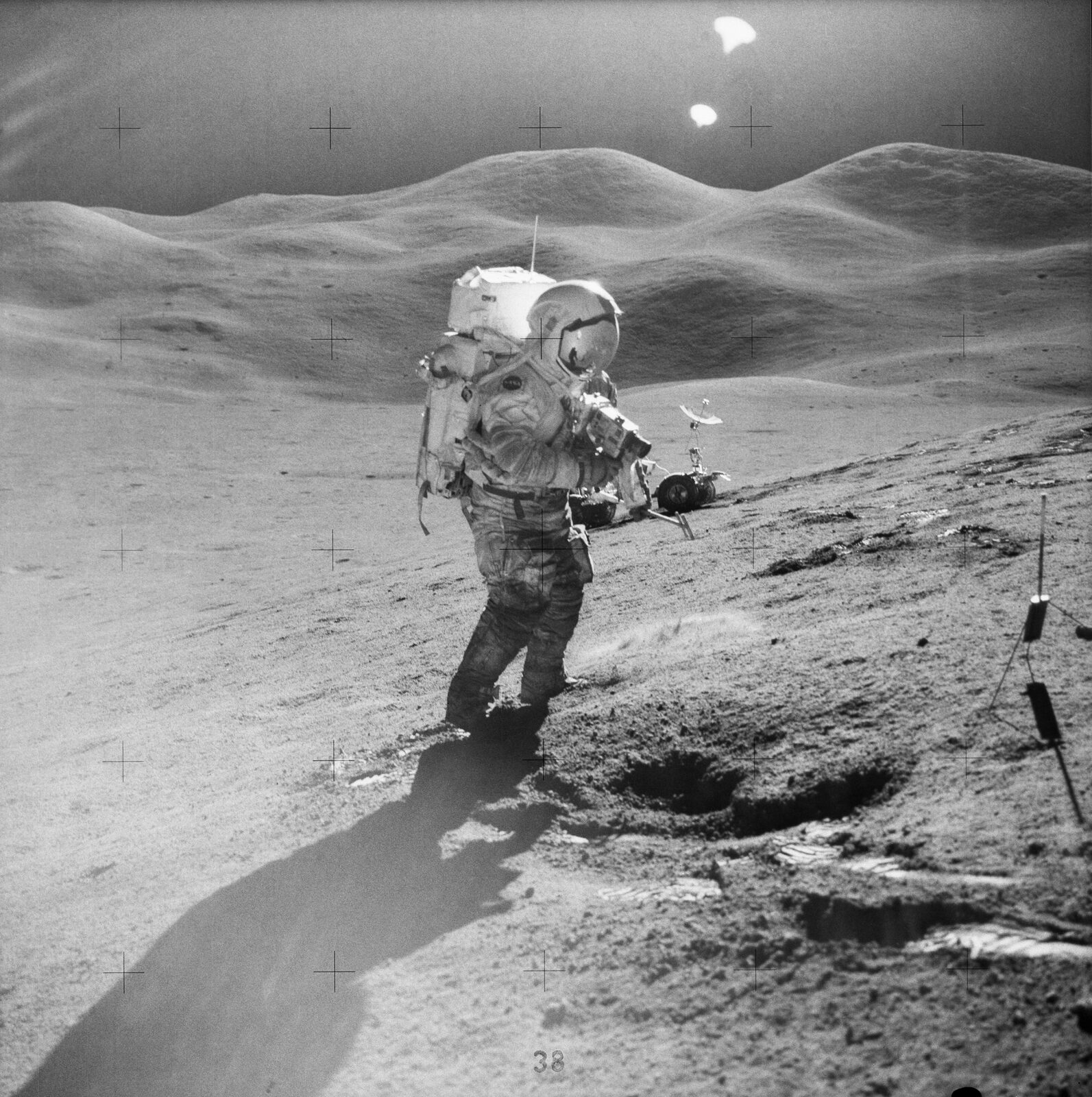
The car had to be designed too.
Boeing and General Motors built it together for 38 million dollars.4 About enough to house and feed close to 1,500 people for 10 years...
On Earth, it weighed 460 pounds. On the Moon, just 76.
Instead of rubber tires, the wheels were woven from zinc-coated steel wire, studded with titanium chevrons.
The whole thing folded up like origami, stuffed into bottom of the lunar module and lowered to the surface on ropes and pulleys.
It's top speed was like 6-7 miles an hour tops.
No steering wheel, just a joystick-like handle between two seats made of tubular aluminum and nylon webbing. The Velcro seatbelts were, by every astronaut's account, a nightmare to fasten in one-sixth gravity.4
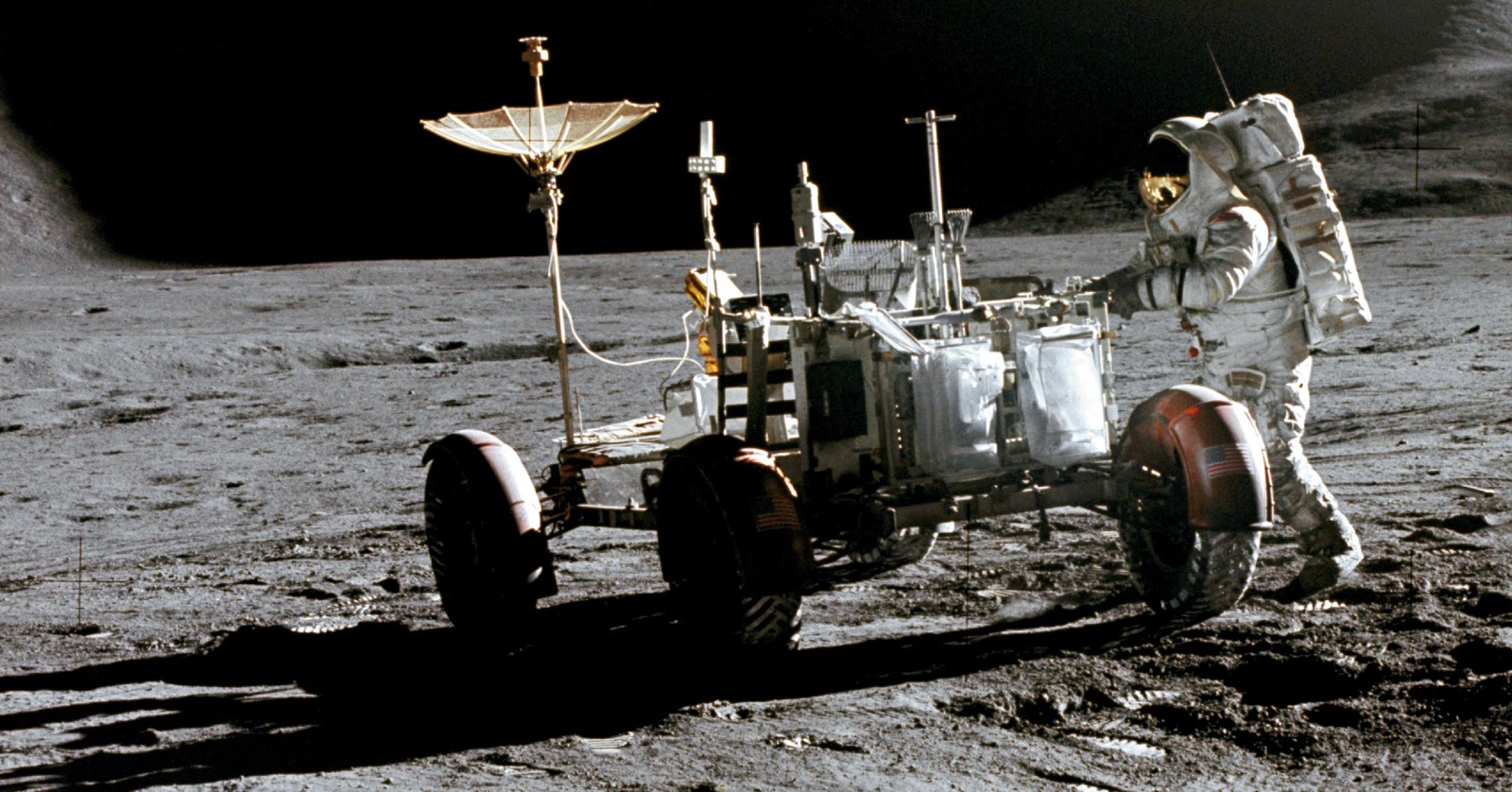
On their second trip out, near the rim of a crater called Spur, Irwin spotted a white rock sitting alone on a pedestal of gray dirt. It was anorthosite. Four point one billion years old. A piece of the Moon’s original crust. The press called it 'The Genesis Rock'.6
On their final drive, near a canyon called Hadley Rille, Scott stood in front of their camera and he held out a geology hammer in one hand, and a falcon feather in the other. He let go of both. Without air resistance, they fell at the exact same rate, hitting the lunar dust at the exact same time. "How about that," Scott said. "Mr. Galileo was correct."7
But before he climbed back into the lander for the last time, Scott did something else.
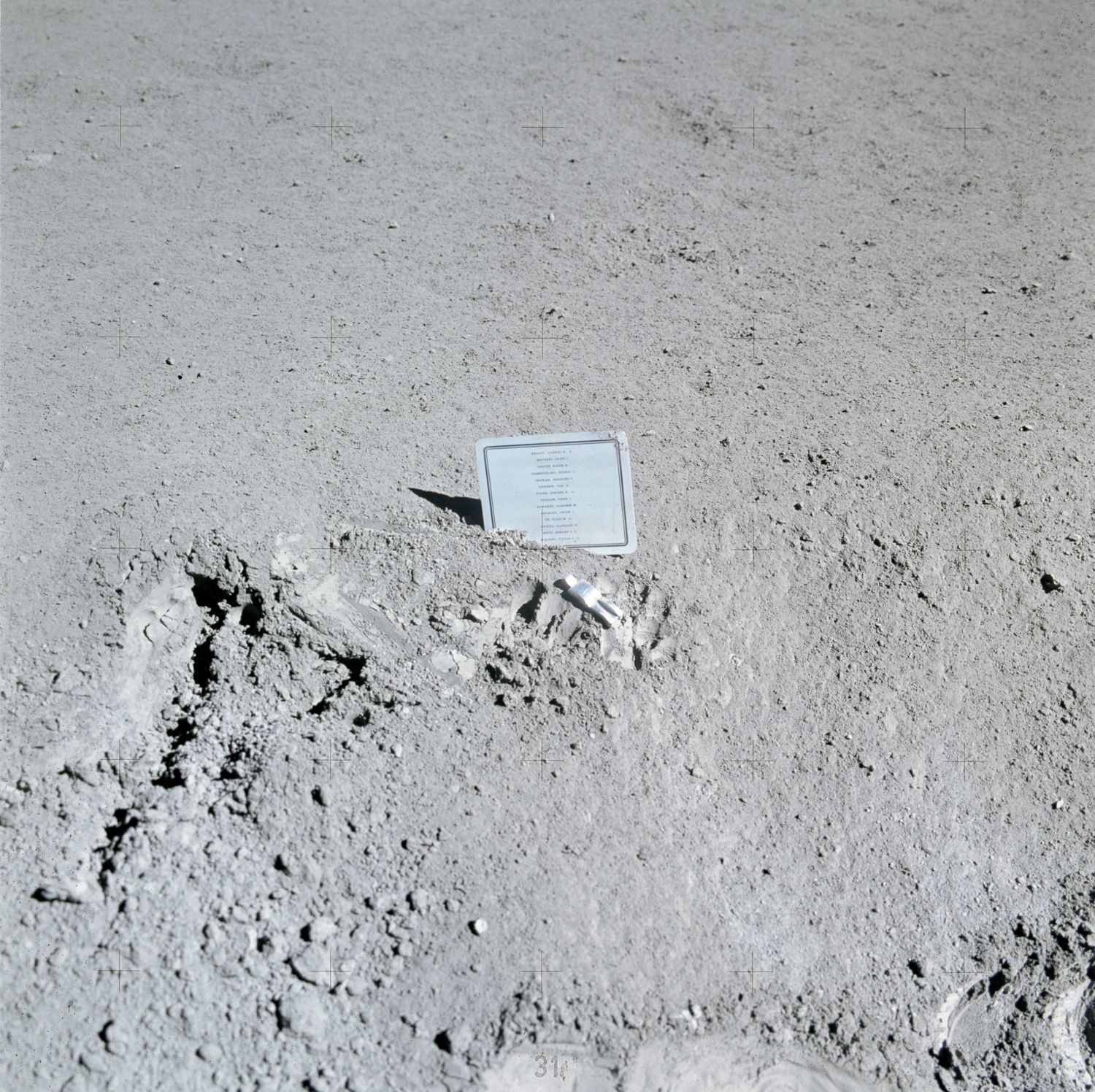
He walked a short distance away from the rover and he knelt down into the dust. He left two things: a small aluminum figure, about the size of a human hand, and a plaque bearing fourteen names.8
He didn’t tell Mission Control. He didn’t tell anyone until after he got home at a press conference. He called the sculpture 'Fallen Astronaut'.8
The names on the plaque, listed alphabetically, no rank and no nationality, were every American and Soviet who had died in the pursuit of space up to that point.
Grissom, White, and Chaffee died after being trapped in the Apollo 1 fire.
Dobrovolsky, Patsayev, and Volkov suffocated after a pressurization failure during the re-entry of Soyuz 11 just over a month before Scott got there.
A wound closer and fresher than ever.
Fourteen names.
Left alone quietly in the dark for the rest of time.
- Charles A. Bassett IIT-38 crash, St. Louis, 1966
- Pavel I. BelyayevIllness, 1970. Voskhod 2.
- Roger B. ChaffeeApollo 1 fire, 1967
- Georgi DobrovolskySoyuz 11, 30 June 1971
- Theodore C. FreemanT-38 crash, 1964
- Yuri A. GagarinMiG-15 crash, 1968. First in space.
- Edward G. Givens Jr.Car accident, 1967
- Virgil I. GrissomApollo 1 fire, 1967
- Vladimir KomarovSoyuz 1, 1967
- Viktor PatsayevSoyuz 11, 30 June 1971
- Elliot M. See Jr.T-38 crash, St. Louis, 1966
- Vladislav VolkovSoyuz 11, 30 June 1971
- Edward H. White IIApollo 1 fire, 1967. First American spacewalk.
- Clifton C. Williams Jr.T-38 crash, 1967
I was 16
My sister took me to the record store so I could buy Brand New's new album the day it came out. June 17, 2003.
2 days earlier the Spurs beat the Nets to win the NBA Championship
I remember everything about this time so perfectly.
Maybe because I can remember 4 months before that just as vividly.
Earlier that year in February, I had just woken up and was eating pop tarts in the living room playing tony hawk when my aunt burst in.
‘We have to turn on the news, now!’ She said in a panic.
They showed it over and over.
That’s probably why the footage is tattooed onto my brain.
Just like 2 years before that when two planes were flown into the towers downtown and we all watched as they both collapsed to the ground.
I can still feel the feeling in my stomach as I watched the Space Shuttle Columbia break apart into pieces over Texas. All seven people aboard died.
They were just sixteen minutes away from landing.9
I don’t know why those two things got wired together in my brain.
But from the first time I looked at that floating astronaut on the CD booklet, I thought of the astronauts on the Columbia.
I couldn’t shake it.
I pulled that disc out of its case hundreds of times over the years. And every single time, for just a second, I thought about those seven people who were sixteen minutes away from seeing their families again and never made it.
Look, I know that's an unfair and possibly inappropriate weight to put onto an album cover image but I don't know, it's just embedded there for me.
The astronaut to me represented a moment suspended in a crux.
Just after a miracle and right before a nightmare.
- Rick D. HusbandCommander. Amarillo, Texas.
- William C. McCoolPilot. San Diego.
- Michael P. AndersonPayload commander. Plattsburgh, New York.
- Kalpana ChawlaMission specialist. Karnal, India.
- David M. BrownMission specialist. Arlington, Virginia.
- Laurel B. ClarkMission specialist. Ames, Iowa.
- Ilan RamonPayload specialist. Ramat Gan, Israel.
The guys who designed the album cover had absolutely no idea about any of this connection, I’m sure.
But they did have their own deeply personal relationship to it.
Don and Ryan Clark ran a small design studio in Seattle called Asterik (Now called Invisible Creature). Brand New had a new record deal and needed good album art so based on their growing reputation they commisioned the brothers.
At the time, these guys were making gritty, iconic artwork for bands like Underoath and Norma Jean.11
If you liked loud music or ever went to a warped tour, you've seen their work
Busy trying to please the label execs to make a album fitting yet bespoke to the then popular emotionally charged screamo movement of the early aughts, the band memebers and AR gave them nothing but the title Deja Entendu and a deadline. No art direction at all.
So the brothers went to work. They started digging through their own archive of found imagery and came across some old space stuff.
They pitched the astronaut. The band said yes.10



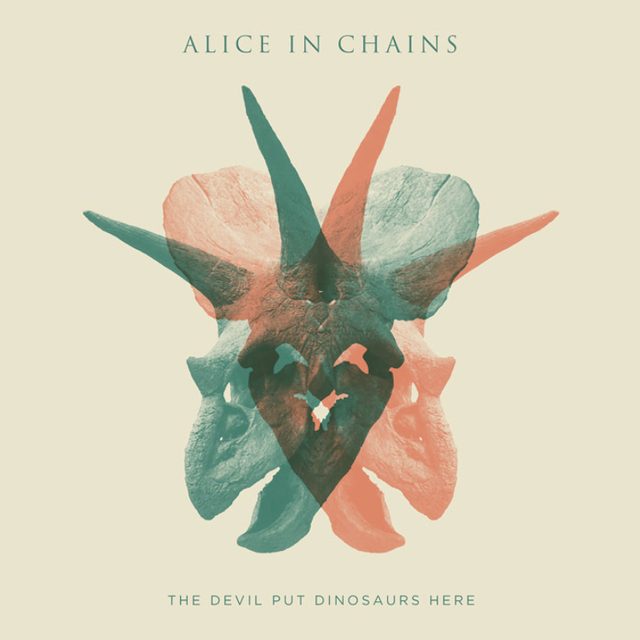
But, out of all the materials the Clark Brothers could pull from, why space stuff? How did they wind up with this specific suit in their box of design assets?
Well, thast's the deeper connection here. The thing nobody buying that record in 2003 or looking at that astronaut would know is that Don and Ryan Clark grew up in a house decorated with decades of actual, early space exploration designs from NASA.
Designs that were created in NASA design meetings to answer complicated questions like:
'Hey can we make a suit that can bend at the waist and sit in a car?'...
This is because of their grandfather, Alfred Paulsen. Paulsen spent thirty years as an illustrator at NASA’s Ames Research Center.12 His job was to take machines and mechanics used by NASA that didn’t exist yet and make them legible to the public through drawings. Space stuff like launch sequences, technical plans and who knows, maybe even space cars. Or space suits.
Don and Ryan credit their grandfather for breathing life into creating through drawing and design for them.
So you can imagine how exciting then it must have been for them when the opportunity came about to complete a full circle in another connective way: 13 years after the Deja cover in 2016, JPL (big space company) hired the Clarks' studio to design posters for their 'Visions Of The Future' series.13
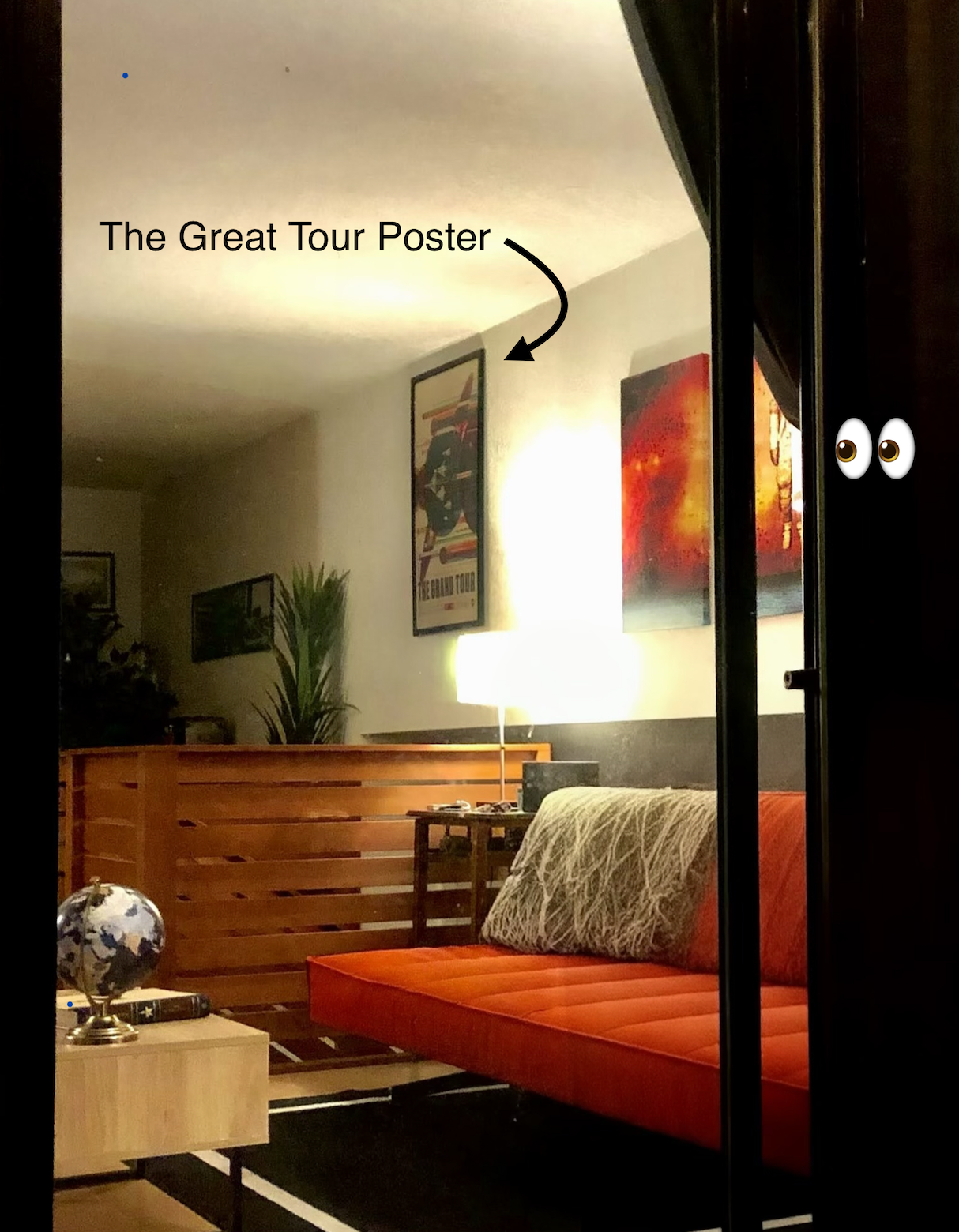
Of which personally, I had 'The Grand Tour' piece from that exact series unknowingly hanging on my wall prior to me meeting Don in 2019, purely by coincidence placed next to a separate piece also designed by the same pens.
To bring it back to 2003, when 4 guys in a band from New York came to Don Clark and he needed an image to work with, he reached into an old folder of passed down space exploration related photos and pulled out a literally one of a kind NASA spacesuit that would go on to become tattoos for thousands of exes for years to come.
I met the Clarks and talked to Don back in 2019 right before covid. I asked him about the album cover and if that suit ever meant anything to him beyond being a cool picture.
He told me that they didn't really even think about it at the time14 At the time they were just refining their design style and learning how they even apprached and thought about album covers.
It was just the work per usual. A deadline to meet. The boring way most design decisions get made.
But when I think about it, These are skillful designers who grew up watching their grandfather turn space related ideas into designs. They were learning.
They then went on to spent their career doing roughly that same kind of work.
Men who one day reached into a folder one afternoon and pulled out David Scott’s Apollo 15 spacesuit without a second thought.
Kinda like a musician reaching into a box of old tapes and sampling them.
Just a reflex. Like a habit. And just maybe a lingering connection to the same habits Alfred Paulson had, too. A familiar melody that that they had 'Already Heard'.
Truthfully that was 17 years ago when I just a pup haha. I think I just grabbed a hi-res version of that image and used it without even thinking. I was in my 20's at the time and the internet was sorta "newish" so we didn't even give it a second thought at the time. Had we known the album would be a hit, we probably would have gone about things a bit different.
Don
Today, the suit itself is not on display.1 It's sitting in the dark, alone in a climate-controlled drawer. No one can see them but it still has that gold visor, the red stripes, the 6 valves. it can stil bend at the waist.
It still has those same creases at the knees from 1971.
The only difference is that now it's tagged with an inventory number A19740189000.
It was once worn by a man who drove a car across another rock. Who proved Galileo right in the vacuum of space.
Who knelt down in the dust to leave fourteen names behind before he flew home.
It now belongs to all of us, the fans. We see it every time we hear Play Crack The Sky
But to me, at it's core, it still represents something haunting and eerie that I can't shake. And probably never will.
Suspended in a crux somewhere between the sky and the sea.
Sources
- National Air and Space Museum, Pressure Suit, A7-LB, Scott, Apollo 15, Flown, inventory A19740189000: summary, materials, 26 layers, 185 lb with PLSS, display status ("not on display ... either on loan or in storage"). Photographs NASM-A19740189000cp01 and NASM2021-02149. Usage conditions apply.
- ILC Dover, Inc., Space Suit Evolution: From Custom Tailored to Off-the-Rack, 1994: A7LB neck and waist joints, the Thermos-bottle line, gold visor coating, the EV A7LB plate reproduced here.
- Wikipedia, Apollo/Skylab A7L: rear entry, A7LB waist and neck joints, connector triangles. NASA Apollo Lunar Surface Journal, Apollo Suit Convolutes: the waist convolute "allowed the Apollo 15-17 lunar surface crews to sit on the Lunar Roving Vehicle." Commander's stripes from Apollo 13 on.
- Wikipedia, Lunar Roving Vehicle: Boeing/GM, $38M, 460 lb, wire wheels, seats and Velcro belts, 17.25 mi on Apollo 15. NASA, Apollo 15 press kit, July 1971. Photograph AS15-86-11603, NASA.
- Wikipedia, David Scott: seventh person on the Moon, first to drive on it.
- Wikipedia, Genesis Rock: sample 15415, anorthosite, about 4.1 billion years, Spur crater, EVA 2.
- NASA, 50 Years Ago: Apollo 15 on the Moon at Hadley-Apennine: EVA timeline and the hammer and feather quote. Video: Apollo 15 hammer-feather drop.
- Same NASA history piece: the plaque and statuette placed at the end of EVA 3, disclosed at the postflight press conference. Wikipedia, Fallen Astronaut, for the fourteen names.
- Wikipedia, Space Shuttle Columbia disaster, STS-107, 1 February 2003; the crew.
- DIY, Inside the artwork: the story behind Brand New's Deja Entendu: Don Clark on the 2003 commission, no art direction, one pitch, "found imagery". Wikipedia, Deja Entendu: release 17 June 2003.
- Wikipedia, Invisible Creature: Asterik Studio 2000 to 2008, clients, four Grammy nominations. invisiblecreature.com/studio: Alfred Paulsen, NASA illustrator.
- The Great Discontent, Invisible Creature (2013): the grandfather quote. PRINT, See Invisible Creature: "illustrator at NASA for over 30 years." Fast Company (below): Ames Research Center.
- Fast Company, NASA's new WPA-inspired ads (2016). WHYY, The story behind the new NASA space travel posters. JPL, Visions of the Future: the Grand Tour, Mars, Enceladus.
- Don Clark to the author, email, 2019. Quoted as written.
- Maps: Lunar Reconnaissance Orbiter Camera imagery served by NASA's Moon Trek (LRO NAC mosaic of the Apollo 15 site at 0.5 m per pixel, and the global WAC mosaic). Rover tracks and station positions from the LROC QuickMap Apollo 15 layer, mapped from NAC images of the tracks themselves. Landing site 26.132°N, 3.634°E.