Why Daisy might be the best Brand New album

Noise & Weight.

september 2026 u/imlyingdontbelieveme20 min read
Listen to DaisyApple MusicSpotify
Good god catch for us the foxes.

New CDs always came out on Tuesdays, so I guess it was a Tuesday.

It was the last gasp of summer's air in September 2009 when I first saw that orange-eyed, almost-smiling, tussled-fur fox, caught mid-crime, staring back at me from a record store shelf. It looked guilty. It looked like me.

I was captivated by an astronaut back in 2003. Demon masks in 2006. And now, I suppose, a fox.

I had a twenty-dollar bill and the album was $13.

Great, I'd still have money left over for gas, a Four Loko, and something off the dollar menu at KFC.

We popped the disc in the player of my buddy's Kia Soul in the parking lot and added ranch dressing to our once-frozen chicken snack wraps.

A minute and twenty six minutes of a staticky hymn, and then, the way a wave collapses over you the second you turn your back on the ocean, it took me out. I heard the noise immediately. I felt the weight in the first line. It was familiar but also brand n... lol just kidding.

Everyone's favorite thing about Brand New is that each album puts on its own persona.
Each one has its own feel, its own style, and each one tells you where the guys were in their lives when they made it.
Which, coincidentally, kept lining up with where i was in mine.

Underneath the personas though, every Brand New album stands on the same two pillars.
An invisible thread that sews all of them together, every song, every record.
Call it DNA, call it the vibe. I'm going to call them pillars anyway.

The noise

This is their Long Island hardcore reflex.
The shit they grew up on.
Music and culture at the coming of age.
Short songs, no filler, chanted lines, weaved melodies, guitar feedback that sounds like it's trying to escape the mix, screams so emphatic you can't tell if they came from a throat or a snare or a guitar, and an eagerness to let a song fall apart, because falling apart on purpose is just good old fashioned rock and roll, baby.

The weight

What the music turned into once the guys stopped touring like it was spring break and started taking themselves seriously as musicians.
The lyrics start to have something to say about heavier topics: death, gods, guilt, all consuming fire.
A general and a specific end of things.
The story's old and it goes on and on…

For three albums those two pillars didn't really hang in the same room well together if you know what i mean.
As one grew, the other would shrink.
Some songs started to stretch out. The tempos slowed down a little here and there. The lyrics got denser and more poetic, heavier in the literal sense, as they took more time to say.
The band treated growing up as a process of slowing down and quieting down, and the tongue in cheek singalongs that detonate, burst and fade got left behind to make room for more of a philosophy.

And then there's Daisy.

2009. The same song shapes as Your Favorite Weapon but with the heaviest lyric sheet of their career and the most aggressive sounds they'd ever put to tape, all on one disc.
Eleven tracks of existential dread compressed into 40 minutes of punk rock brevity.
Daisy is their truest anomaly. And just might be them at their peak.

So that's my argument.
On Daisy, after three albums of taking turns, the Noise and the Weight fuse into one thing: the loudest, most abrasive version of their sound wrapped around the most exposed writing they ever did.
The aggression is there to protect the vulnerability.
It's a psychological state more than anything, but we'll get to that part.

It first starts with who is doing the talking.

Can't hold on to the thrill

On their first three albums the lyrics come from a POV either staring into a mirror or pointing a finger straight at your chest.
Those are songs centered around a relationship between the singer and somebody sitting across from him, even when that somebody is only himself in a different light.

On Daisy the gaze turns outward.
The second person drops to its lowest point in their work, and "they" and "she" start doing heavy work instead.
Bought a Bride, Bed and Sink are narrated instead of being addressing.
The woman in Vices is seen, not talked at. The narration begins to take the spotlight.
Something changed.

The last song on the first album promises to stay eighteen forever.
The first song on Daisy says those days are dead.

Writing like that comes with a catch.
You can't narrate a forest fire, a drowning and a funeral over a slow, somber tempo without it turning into a eulogy.
An outward look into tragedy needs some kick to it if we're to ever survive it.
It needs the Noise.

The bullet or the chapstick

Most of what anyone can say about a favorite album is subjective, so for an exercise like this I'll try to begin somewhere more measurable.
The first thing I want to do is to exemplify is how 'Brand New' Brand New went on Daisy.
To do that we need to talk about what a Brand New song looks like. The song shape, if you will.
Starting with song length.
National phenomenons (Self-proclaimed)
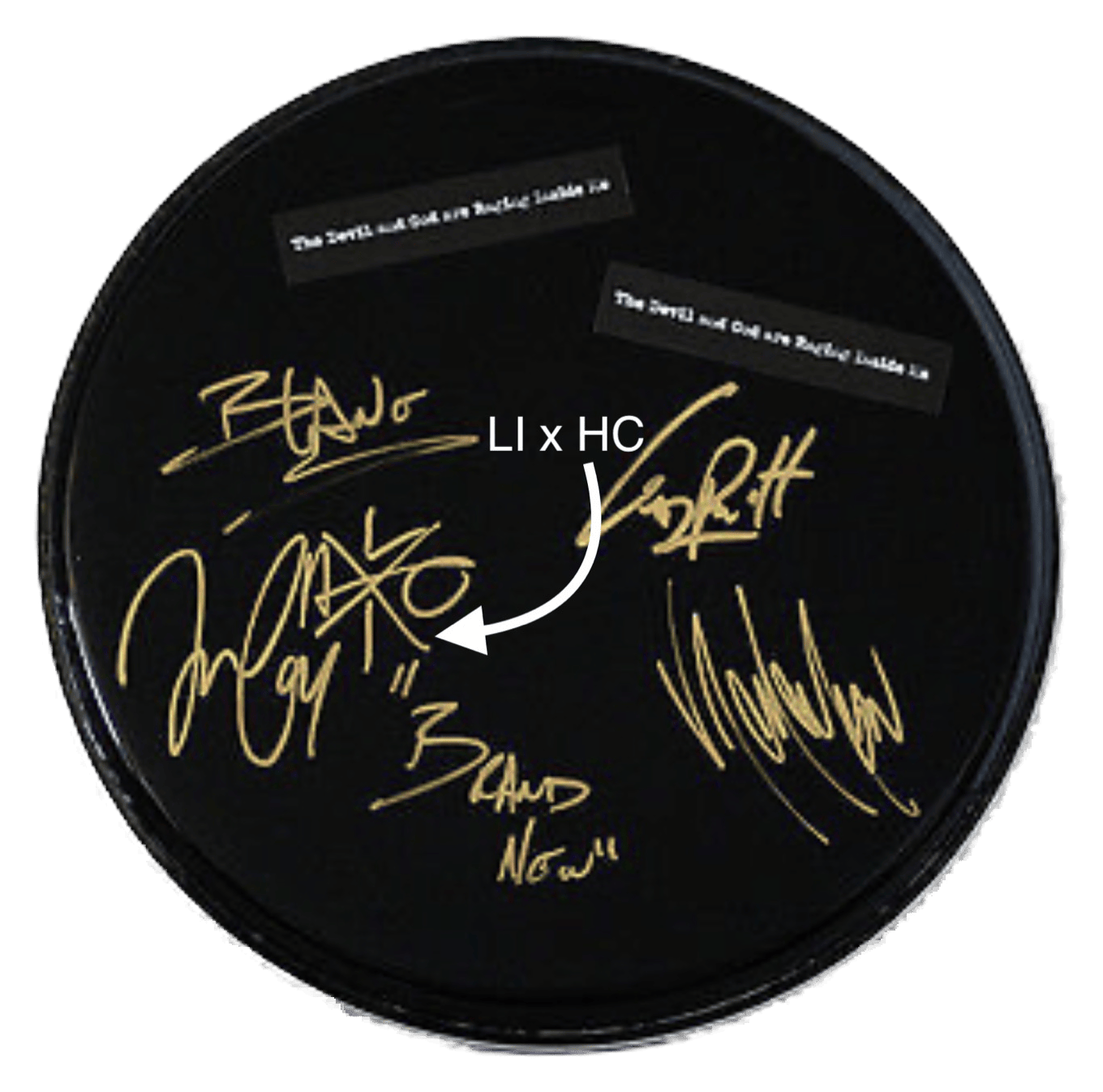
A drum head signed by the members of Brand New in gold marker, with 'LIxHC' beside the lead singer's autograph

If you have anything signed by the band, specifically by the lead singer, you might see an 'LIxHC' imprint next to his name.
Long Island Hardcore.
The good shit. It's what they (we, i should say, because i was there too) grew up listening to and tried to learn how to play. It's the bands we'd spend our time talking about and buying shirts from.
This is a fingerprint of who they are at their core. Of what and where we came from.

identity. for a time.

They were hardcore show kids listening to loud, energetic rock music before they wrote a single note or lyric. And we, you and i of all people, are all here because we get it. The music that meant something to us back then followed us around like a shadow into our lives and every stage of it.

3:20median track · Your Favorite Weapon · 2001
=
3:20median track · Daisy · 2009

In hardcore and punk, track runtime is the simplest blueprint a band can follow, and Daisy lands on the exact same 3:20 median that Your Favorite Weapon holds from almost a decade earlier.
In between, the other two albums stretch their legs a little.
After YFW, the median climbs to 4:34, then 4:23. After Daisy it climbs again, to 4:58.1

A ghost in the form of track length. 2001 standing at the bedside of 2009.

The band's fingerprints

Lay out their five full lengths in release order and play around with each tab below: song length, tempo, structure.
Daisy and Your Favorite Weapon look the most alike on all of them.
On nearly every axis, Daisy sits closer to who the boys were in 2001 than to tdagarim that came right before it and before deja before that. Back to the roots.
Before the fuckin' suits with the big cashable checks, but we'll get to that part later.

The alikeness is interesting enough to me on its own, but I should to take you back to the first time I saw them live to explain why this part of the argument matters to me.
It was 2002.
I'm in a sweaty room packed with 50 other 14 year olds, maybe 8 cell phones total, 0 with cameras, and 4 guys from up in Long Island going absolutely batshit onstage.
The singer couldn't really sing and was kinda punching or clawing at his guitar pickups.
The other guitarist didn't seem to care what notes were being played as he hurled his instrument 80 MPH, damn near decapitating anyone next to him.
The drummer was beating his cymbals like they owed him $700.
The bassist looked bored.
And cool as hell, which for NYC in the early aughts was basically the same face.

It was fucking chaos.

Back then, shows were basically parties that had a $5 cover that your friends would hang out at more than they were musical performances bursting with a showcase of talent.
They were purposefully unlistenable and fun to the highest degree.

It was the Noise.
This pillar is the soil their roots grew from.
The 'style' can (and does) change on every album. This is something bigger than style, something you can put an identity in, something important enough to sign your name next to.

Daisy is them speaking their native language again.
A 3:20 song is the heartbeat of Long Island hardcore, and by going back to the shape of their youth they built a container tight enough to hold the pressure of their adulthood without it all spilling over in a mess.

You can hear it

0:00/0:27
“Mix Tape” Your Favorite Weapon · 2001 “Vices” Daisy · 2009

Lower Cases & Capitals

There's a version of this record where the band matches the bright, young shape of the music with lyrics to match: 2002 themes, girls, phones, cars, passing out on overpasses. The Fall Out Boy route most of their emo-pop-punk peers took when they traded depth for the dancefloor charts in the 2000s.

Daisy reads like none of that.
Deaths, fires, drownings, packed into short songs.

Themes
Daisy's Theme By Song

    Daisy is the shortest lyric sheet of the five albums. 2,737 words.

    Across 29 tracked word themes, it places first or second in 15 of them.
    No other album they've released clears 12.2
    It lands the same number of theme hits as tdagarim in about 470 fewer words and 14 fewer minutes.

    These themes definitely overlap. Mortality, nature and water aren't independent of each other when they show up in the same verse, meaning that a word like "drowned" can score in two categories at once.
    I only mention that because I'm not reading these as a scoreboard, it's mostly helpful to view the compression I'm talking about.
    Daisy can stack three or four ideas into a single bar when the other records give each one its own song.

    And if we were to be more meticulous about it, the clock is even a little misleading.

    Some of those minutes have no singing or lyrics in them at all.
    Vices doesn't let a lyric in until a minute and a half at the start.
    Daisy has the preacher announcing hymn number 99 before words show up.
    Gasoline fades and continues with feedback noise for another minute.
    Noro spends its last stretch dissolving back into that same hymn from before and the noise around it.
    Strip those seconds out and the window where a person is actually singing words at you is smaller than the tracklist says.
    The density you can read on these charts is already the tightest in the catalog.
    The density you hear, in real time, is way tighter than that.

    They pack a hell of a punch in there too.

    A masterclass in songwriting happens as those words and themes start to dance with one another inside a single song, sometimes a single line* and acting as a throughline throughout the album.

    In Vices there's a woman saying goodbye to the ground and then, immediately, a fire ripping through a forest.
    Bought A Bride paints soullessness as an empty red house and then shifts to wonder what ever happened to plans we had for one thing, once it got used for something else.
    Daisy is just a list of nature gone wrong: a weak, moveable mountain. a pathetic, cold sun. an old, dry riverbed where water once crashed over.

    But that fire in Vices doesn't just stay there. It spreads.

    The album opens with a forest burning and it closes with Noro's final request: if we die, burn down the forest and then later again, burn down everything we've begun.
    Just like the hymn On Life's Highway being sung into and out of the album, a fire starts and ends the same way.

    In between the flames, Trains.
    Hell yeah, trains.
    Gasoline keeps jumping toward a train, Bought a Bride ties her up and lays her on the train tracks, and Noro ends up at a literal train crossing.2


    Journeys and their ends.

    On Deja and TDAG the themes mostly take turns like the records are trying to work through a syllabus.
    On Daisy they show up together, all at once, the way trauma shows up in real life: never welcome, badly scheduled, and fully consuming and exhausting at the same time.

    Frequency of Daisy's Themesink: most · green: second most · dashed: least

    The themes where Daisy falls in the rankings tell the same story from the other side:
    love and romance, identity and self, control, music, technology.
    The record with the most death and the harshest elements also has the least room left over for romance or self-description.
    The band felt it while they were recording saying they started to realize a difference in "how many songs are about something coming to a close, or knowing when it's time to put something away and move on."9

    From hoping it rains all the time on an ex in London to buying a hammer and never singing again.

    All the paintings we would be without

    Keeping the energy of their core while deepening the weight of the words was, of course, super on purpose.

    Accardi, Tierney, Lane, Lacey

    The writing credits on Your Favorite Weapon cite everything to "Brand New," the band as one undifferentiated unit.
    Deja Entendu prints Accardi and Lacey together on 5 of 11 tracks.
    TDAG assigns every lyric to Lacey, with one exception, and Science Fiction goes back to a blanket credit, the whole band again.11

    Daisy, once again, is the outlier.
    It prints a lyric credit per track, and Vincent Accardi is on 7 of the 11, writing alone on 4 of those seven.
    "A majority of the music on this album was written by Vin."12

    Accardi plays lead guitar and is the primary builder of the Noise. His out of body riffing and guitar wailing are a signature part of the band's sound on every album.

    The collision on Daisy exists because the same person writing the music is also where the lyrics are coming from.
    The two pillars meet in one head before they ever meet in the mixing room, and I think you can feel that connection listening to the record.

    Tracks with a printed Vincent Accardi credit

    Overall in '08-'09, the band wrote, demoed and recorded about 35 songs at Mike Sapone's studio for this release.
    They cut that down to 15 and then cut it down again, down to the last 11 standing.13

    The best of the best


    They had over a full year with no label breathing down their neck, no clock running, no deadline pushing them, and because the band owned their own gear by this point, they got to fine tune and put every track's sound through the fire.12

    An even keel

    We have to talk music theory for a second, because the music at a glance tells a different story than your airpods will.
    Look, I took like 4 guitar lessons in high school and learned to play a few Brand New songs during covid, and so that's the extent of my perspective on music theory. But there is still something interesting here

    Line up Daisy's tab and chord sheets against tdagarim's and at first it looks like a step backwards.
    TDAG built songs on a few odd meters and color chords. It's an album with weird shit like add9s and sus voicings that sometimes don't resolve exactly where you expect.
    Daisy, by contrast, is confusingly plain.
    Bed's chorus is Em, G, Am, C, about as vanilla a progression as exists anywhere in pop songwriting.
    You Stole is three chords and a couple of notes sliding around to wordlessly echo the song title* for the whole song.
    Noro spends most of its time on just two chords, Em and C.
    Somebody reading those charts with no other information might think the band that once wrote the more varied progressions lost their edge, or went chasing a safer sound.

    But that idea only holds true without guitar pedals and amps.

    Remember, Daisy was cut almost entirely live, together in a room at Sapone's home studio, chasing what the band described at the time as "simple, loud rock songs."13 A deliberate retreat from the solo recording sessions, intricacies and layering of the records before it.

    You can tell that during this time, the boys were playing with pedals. Lots of them this time.

    The guitar tone sitting on top of all those plain chords is, to my ear, a stack of analog overdrives run into real amps.18 Pedal into pedal into tube, each part pushing the familiarity of a note further and further, until the gain itself becomes an instrument with its own voice.
    The complexity is still there. They just moved it into the sound.
    From harmonies into textures. From what strings are pressed on a guitar into how loud and how fucked it sounds by the time it reaches you.

    To finish this point I need to talk about my dog lol, I'm sorry but I really do.
    She's a rescue. She has real trauma from being a weeks old puppy abandoned on the road.
    When I adopted her you could see the hurt. She would flinch at raised hands, she'd cower, and she'd bare teeth if you moved around her too fast.
    She looked, honestly, a little dangerous if you didn't know better.
    It didn't take long before she'd let me pet her without bracing first, and soon after that she became the single most affectionate animal I've ever met.
    An incredibly secure and happy dog who turned out to love kisses, belly rubs, spa days, and wearing cute scarves.
    Her trauma was real, but it isn't her whole story and it doesn't define what kind of dog she is.

    I thought about her while writing this part about the album's sound. Underneath all that growling gain, the screaming opener and the wall of pedals, Daisy is playing some of the most approachable, hummable melodies in the band's whole catalog.
    It's simple songs wrapped in a sound that tells you, on first contact, "Hey, keep your distance."

    That's the whole record's defensive mechanism, and it's the same defensive mechanism as my dog.
    The band had never been this exposed. They became a big band, something they were scared of an album before. They had written and opened up alot of themselves, and alot had been written about them over the years, and so they purposefully wrapped all of that up into the loudest, most abrasive version of their sound they could find.
    Certain vulnerabilities call for a certain kind of protection.

    Like saying "You really like me? Prove it"

    Looking at the sheets, TDAG is the harder record to play and, interestingly, the easier album to listen to.
    I think that's because all of its complexity sits right on the surface where an ear can catch it immediately.
    Daisy ain't that.
    It's an easy record to play disguised as a hard one to enter, because all of its difficulty got moved into the sound.

    Push open that heavy door of noise, the same heavy ass door I mentioned earlier, and what's waiting on the other side is Em to C, melodic and almost gentle, standing there in a cute scarf asking for a belly rub.

    Love the bomb

    My mom always told me, before you argue something, make sure there's a reason to. I think there's a reason here, and it has an unfair tone I don't love.

    The people who engage with Daisy rate it within a few points of the band's best work.
    The average Brand New listener, in aggregate, plays it a third as often as anything else in the catalog. When I look at those stats I don't see a bad album. I see an album being avoided, and the avoidance is worth talking about.

    I don't know about you but I never get tired of it

    Let's look at the reviews from 2009.

    Album of the Year scored it an 81, against an 82 for Deja Entendu and an 87 for tdagarim.
    Sputnik gives it a 3.9 against a 4.1 for Deja and a 4.4 for TDAG.5

    Review scores can't really speak on engagement though, and the listening numbers fall off a fuckin' cliff.
    On Last.fm, Daisy sits around 294,000 plays against roughly 900,000 for each of the other four albums.
    Its most-streamed track on Spotify has 11.8 million plays, against 94 million and 84 million for the equivalent tracks on the two records next to it.7

    Yo, why aren't you guys listening to Daisy?

    I've got a theory: we listen to tdagarim and get a feeling of being understood. It can show us a mirror and lets us see parts of ourself that we may not like. Or even hate. Or maybe like too much. And also kinda hate.
    Or, and also, it can help us frame difficult concepts and feelings that are often vague or hard to describe.
    Yeah, Daisy ain't that either.
    Daisy corners us right away, the way that fox on the cover looks cornered, caught somewhere without really knowing how it got there.
    It's a heavier door to push open, and some people, some days, when they want to listen to music, don't feel like pushing.

    To be fair, some of that intial friction was self inflicted, though.
    That summer when the band announced they were doing a new album they said it would be called 'And One Head Can Never Die'.
    A couple days before it came out and bam, it was called Daisy instead.13
    That coupled with the first thing anyone heard was a minute and a half of hymn tape and an at first unrecognizable scream.
    It was a first impression that didn't really land for a listener who pressed play expecting the sound and overall philosophy of TDAG.
    Like the feeling right after you have a really awkward, weird handshake.
    That friction serves as another cost of this record.
    We can actually look at the gap between what critics said about it and how often people play it to help measure how heavy that door is.

    Good ratings. Bad listeners.
    Critics vs. fans
    Same-year critics' lists

    I always have to remind people too that it was a well reviewed album when it first dropped.
    It scored a 75 on Metacritic, ahead of Deja Entendu's 70, close behind The Devil and God's 78, and behind only Science Fiction's 88 almost a decade later.3
    NME gave it a 9 and called the band America's most graceful. (Aw.)
    Rock Sound and AbsolutePunk both gave 9s. Spin gave it an 8.


    The complaints, which continue to come, are mostly about structure I think? There's the 'soft-loud dynamic' some reviewers called a 'crutch' (which exists heavily on tdagarim too so...).
    A few writers called the album 'contrived' without much explanation as to what that means, and AllMusic argued the "furious" songs didn't quite land, without ever giving an example of what a landed one would have sounded like,15 so idk what to tell you about the criticisms because no one can really pinpoint exactly why it gets listened to a third of the time.

    Anyway, all I know is that by the start of 2010, Daisy had already shown up on 5 separate year-end lists: 3rd on AbsolutePunk's top 30, #11 at Kerrang!, #14 at Rock Sound, #21 at Spin, #28 at Sputnik.
    The Devil and God, the record everyone calls the band's best, cracked one list.
    Deja Entendu didn't make shit.
    Science Fiction, eight years later, would eventually tie Daisy's total of 5.16

    One more time with feeling

    From the jump for these songs the band was thinking more about the type of music they'd want to play live more than about what an listener would want to hear from them.9
    They love playing these songs. They don't make a set list without Daisy.
    In fact, Gasoline, one of the heaviest songs on the record, is most commonly the second song of the night, most nights, every tour since its release. They've played it over 300 times.14 and it burns the venue down every single time.
    At the Bottom, You Stole and Sink are not far behind it.


    For what it's worth, the more subdued parts of the record don't seem to be live favorites.
    Daisy the song has gotten 5 live plays across the band's whole career.
    They've done Be Gone like twice.
    And yet, speaking of Daisy, it's the album's second most-streamed song. People find an untoured song entirely on their own.
    A possible signal that the barrier to entry explains that avoidance we talked about, and says nothing about the album's overall quality.7

    Daisy on stage and streaming
    Accardi lyricAccardi and LaceyLacey
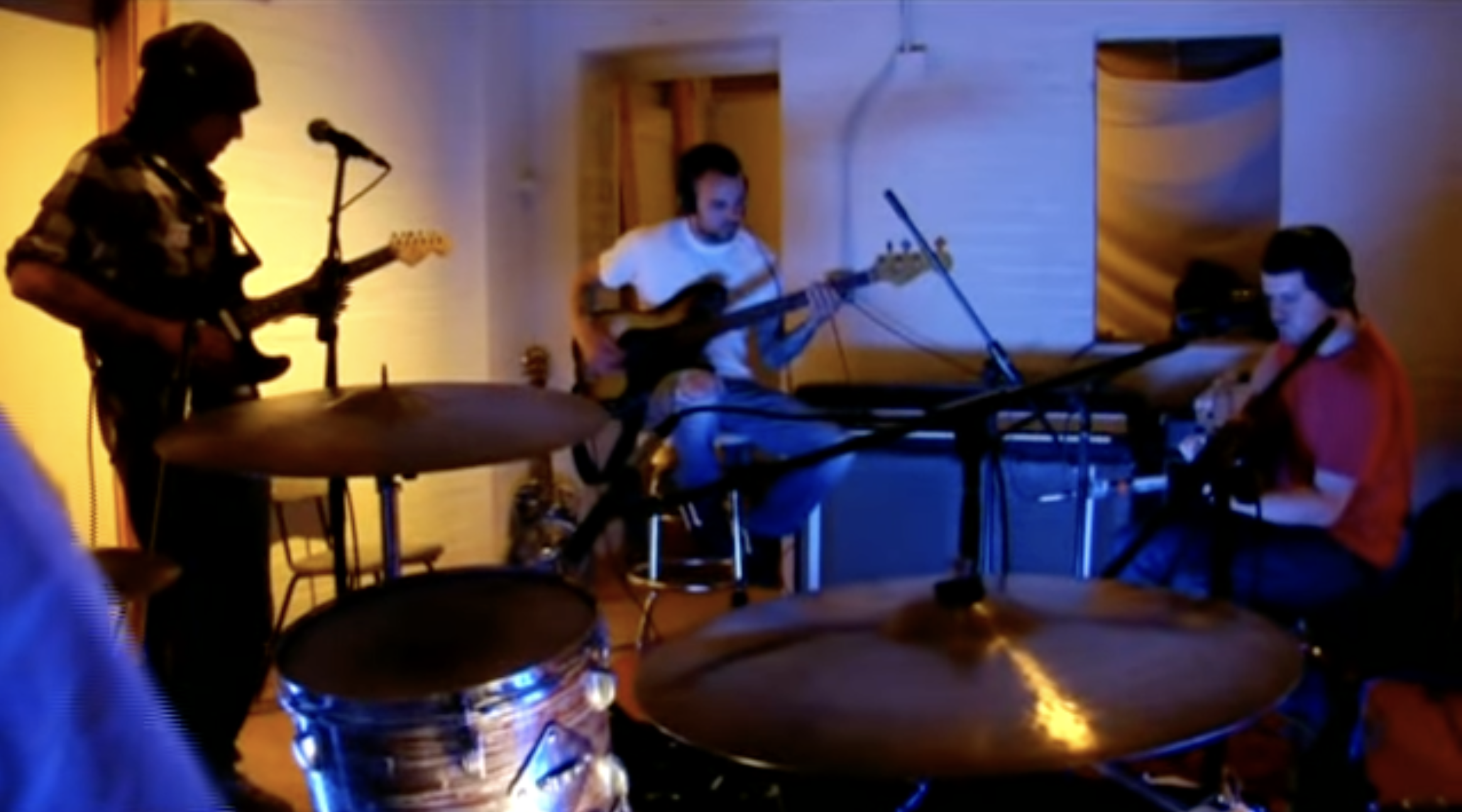
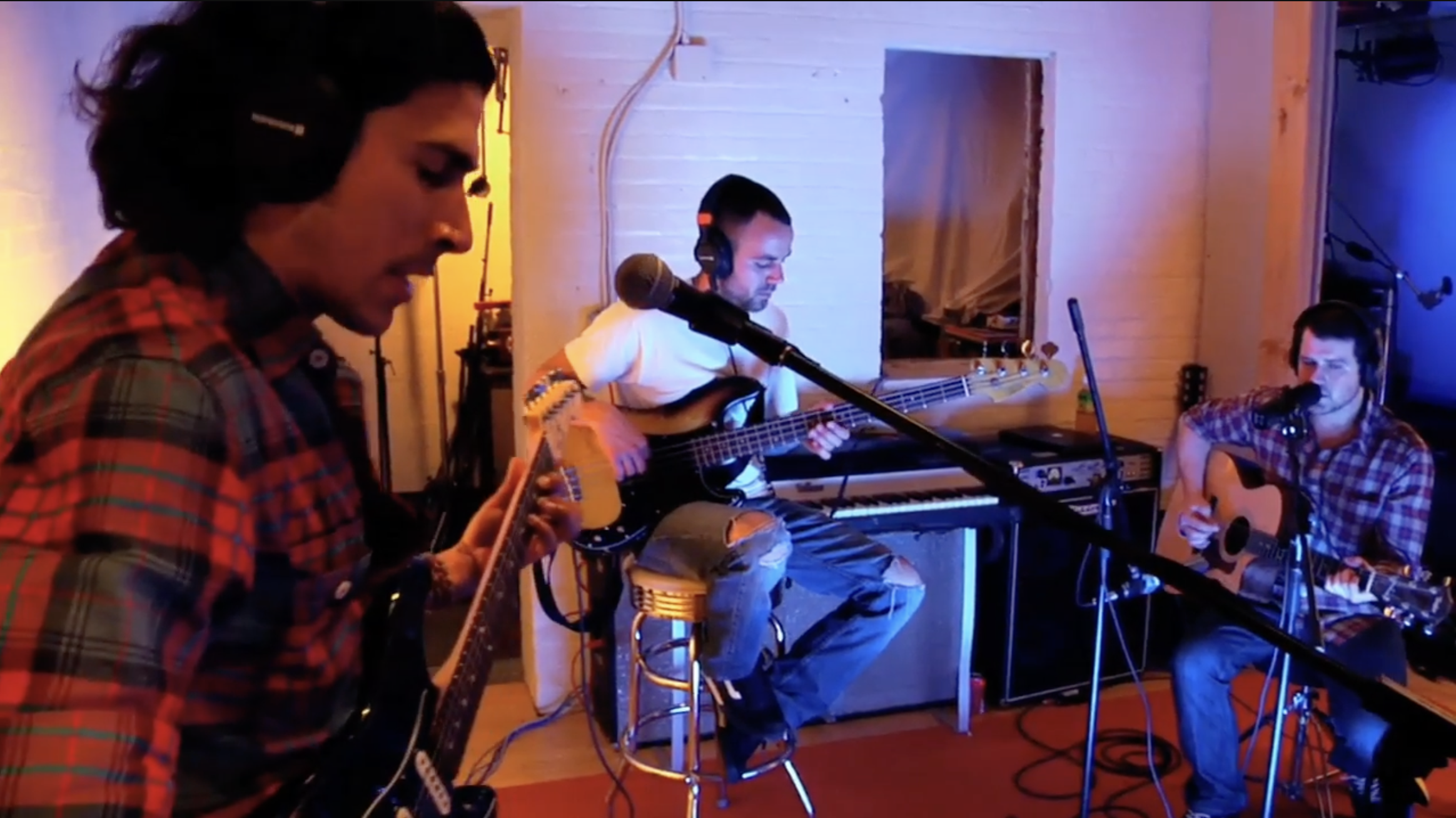
    Brand New performing 'At the Bottom' in the filmed Daisy Sessions Watch on YouTube

    If you haven't, you need to go watch the Daisy Sessions on YouTube. Specifically Bought A Bride and At The Bottom.
    Go on, I'll wait.

    These sessions are clearly important to the band personally, because they're the only live performances the band has ever released on their own channel.
    A youtube channel they started, by the way, in 2009 for Daisy. Not for Deja's music videos or anything from TDAG. Immediately after, seemingly because of, these live sessions

    My favorite is the that Bought A Bride one.
    It goes especially hard once you break down what the lyrics say and color in some context from their experience recording TDAG before this.

    Story time.


    Back in 2005 while the band was putting TDAG together, some whacko big shot exec in a suit at Interscope Records heard some clips of what the guys were putting together and got frustrated that it wasn't easier to listen to. In short, not an easy sell.
    This guy that signed them told them "I thought you were going to be like Bruce Springsteen!"17
    Which tells me alot of what I need to know about that guy.

    A paragraph quote from an exec

    Well that did it.
    No more suits.
    From now on this band was gonna write whatever they wanted to god damn write.
    Defiance is a familiar part of that noise pillar.
    Their core thrives in these chaotic, challenging waters.

    As artists tend to do, they, in my read, wrote a song about it. Consider Bought a Bride, where the singer is tearing through a scream about systems and structure taking over individuality, stripping away intimacy by making everything transactional.
    In short: "Fuck you and your paychecks, Luke, we're gonna write what we like."


    That's not even my favorite part, though.
    The song alone could have spoken volumes about their experience and stance on who owns their music, but they added an exclamation point to that middle finger towards the industry by doing what that exec wanted anyway. They stripped out the noise, lowered the chaos and decided, to prove to the suits that they have become masters of their respective crafts.

    Kinda like saying, "Yeah, we can be like Springsteen or whoever else if we wanted to, but we're not your little cash monkeys anymore, LUKE."

    Daisy is the album they wrote for themselves as a band only. Not for no label.
    They went two records with suits telling them to subdue their inherent sound, who they should be and what 'Brand New' should sound like.
    They didn't listen for Daisy and they fought back. They said it plainly that summer: they set out to release an 'unconventional album on a conventional label'.12 They got serious and proved it in more than one way.

    Brand New performing 'Bought a Bride' in the filmed Daisy Sessions Watch on YouTube

    You can see the seriousness in the videos. There is a care to every note, in how delicately they approach each bar, in the respect they show the mics so the sound mixes right.
    These carefree punk kids clearly have made a decision to become professionals. Playing songs for the fun of it turned into a masterclass in their instruments and in how they approach their sound.

    The days of jumping on stage and sounding like shit were long gone. On TDAG they proved to themselves they had the ability, Daisy was their chance to victory lap.

    If you want to hear what that mastery sounds like once it loosens its tie, put on In a Jar.
    Around the two minute mark, lacey's voice locks onto Vin's guitar line and the two of them start to dance.
    the weight and noise together but I can't really tell which one is pulling on which.
    Breaking up a word with the word's own definition and giving it a stage to share with the sound? Only master musicians can pull off a fun balancing act that has this much energy.
    An effortless display like someone 8 feet tall dunking a basketball.*

    A statement saying, 'Not only can I do this, but look how easy it is for me now.'

    0:00/0:08

    So let me try to bring all of this together.
    This is Brand New at their peak. They proved they could play delicately. They proved they understood melody. They had a label handing them checks and telling them to sound like sellable rock.
    Instead they chose violence. On purpose. And vociferously they used the label's own money to make something the label hated.
    That's rock and roll baby.

    This is the last one

    For a decade Brand New oscillated between different energies.
    Boys screaming in sweaty rooms, and then men whispering about guilt and loss in studios.
    Daisy is the only moment where all of those energies live in the same space at the same time, recorded live for a reason. With purpose.

    It's shaped from the way they started and it's heavier than anything that they've ever done after.

    They put away reflections for the listener and started to narrate the world and themes. And the band, knowing exactly how exposed that could leave them, answered with the loudest shit they knew how to make.
    The chaos protects the rawness.
    The bared teeth guarding the loveable parts.

    That's why people avoid it, but it's also why it's the best thing they made.
    Nobody avoids a record on purpose in such obvious and specific numbers while critics rank it alongside the band's best work.
    People avoid it because it's asking too much of them at first.
    Daisy asks you to sit with a cornered animal until it stops feeling cornered, the way that fox never drops its stare, curious what your first move is going to be.

    I'm asking you to push the door. Yeah, it's super heavy, and that's the point. That's what makes it so good.
    What's waiting on the other side is the only Brand New record that paints a complete picture about who they were and who they became without flinching.
    Truly their masterpiece.

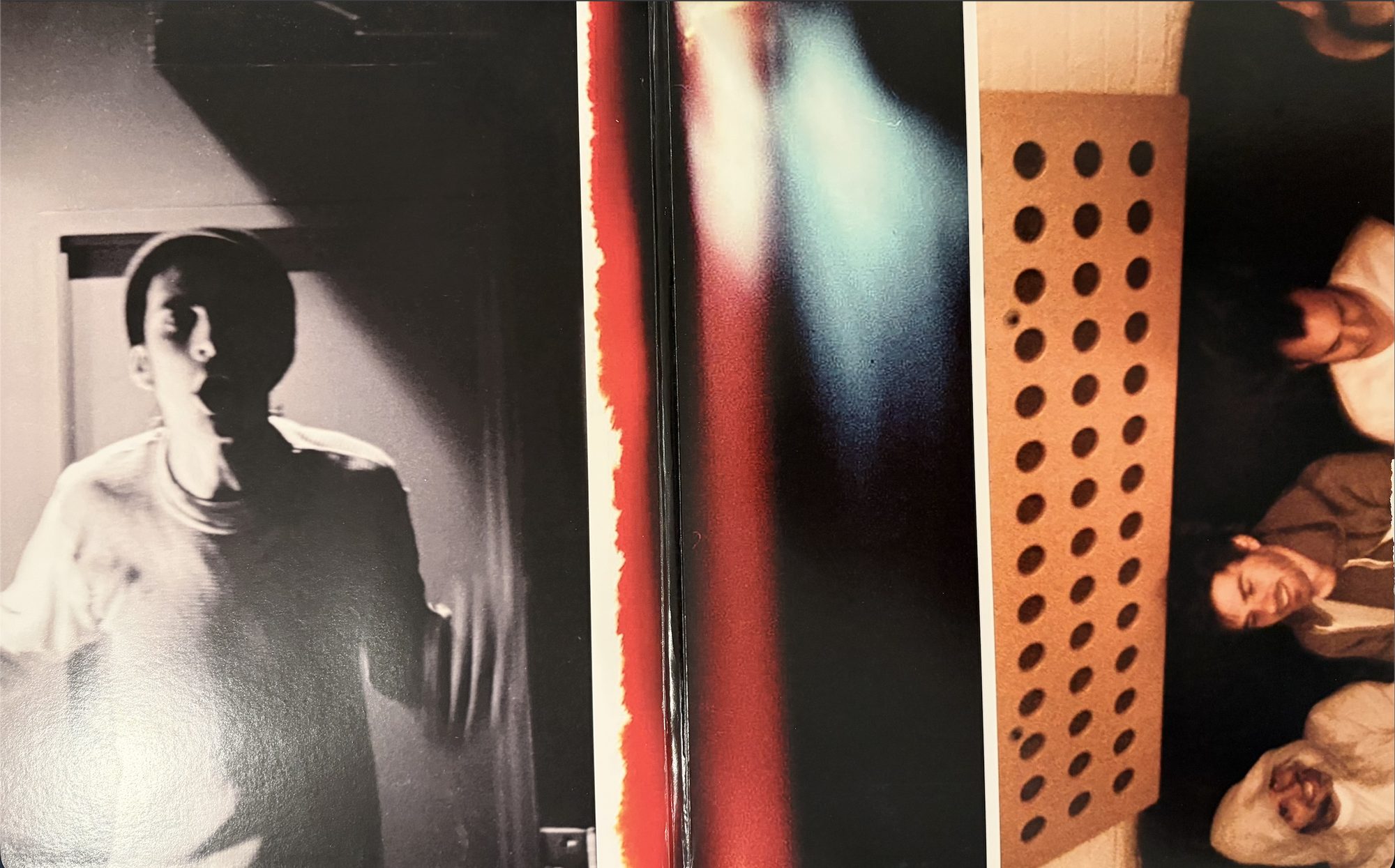
    Some details from Brand New's printed booklets and liner photography, laid side by side
    On my way out

    It's a misunderstood album. It carries its own baggage and it has a reputation that isn't fair to its backstory.
    It doesn't want pity or a consolation prize.
    It wants somebody willing to push a heavy door open and sit with it for a while.
    It just needs someone to listen to it.

    I hope that you would do this for me.

    The fine print

    How it was counted, a few notes, and my sources.

    Method

    The artifacts used to compile the data totaled up to be 64 transcriptions: five studio albums plus the seven reworked demos, which are held out of every comparison being more of an LP than a full-length.
    Theme counts use 29 word groupings that I generated from my own python script, available upon request. They were matched as whole words against lyrics. I pooled words first rather than averaging per-song densities, which is why a 16-word intro like Tautou doesn't offset Deja's water score.

    The 29 themes are not independent of each other, either. A single word can belong to more than one theme (Forexample, 'drowned' counts for water and for mortality), and words from several themes routinely land in the same line.
    The ranks on this page are descriptive, they say where Daisy sits among five albums on each grouping, and I'm not using that in itself as a finding. The specific reason i'm using that is to prove the density: the same number of theme hits as The Devil and God in a sheet 470 words shorter.

    Track lengths, credits, charts and sales come from each album's Wikipedia articles, cross-checked on Discogs and Apple Music where I could; no two sources differ by more than two points or seconds on any track.1 Reception numbers were read directly from Metacritic, Album of the Year, Sputnikmusic, Best Ever Albums, Last.fm, Kworb and setlist.fm on June 4th and 5th, 2026.
    Science Fiction prints only a blanket credit, so I didn't do a per-track authorship for it.

    Arguments I'm making

    Bullet points for the tl;drers

    • The gaze turns outward on Daisy
    • Daisy stays true to the band's energetic, noisy chaos while the lyrics matured
    • The fire theme runs the full length of the record and bookends with the hymn.
    • It's their most complicated album
    • Critics rated it above Deja Entendu
    • It also beat Devil and God on the Billboard 200 by 20+
    • The collision of noise and weight came from the credits
    • They had over 35 songs ready for Daisy, distilled those to 15 and then to 11, over twelve months. Daisy is the product of the best of the best.
    • They wanted to make an uncommercial record and push it out on a commercial label, on purpose. Because that's punk rock as shit.
    • Gasoline is a top-five live song
    • It's the only album considered good enough to warrant live-in-studio versions
    • The moment in In a Jar is proof of mastery of their sound
    • The guitar tone is a stacked analog gain chain on straightforwrd chord progressions
    • It's an important record for the band.
    • That sample of "On Life's Highway" as an intro and outro proves their intentional, mature approach to creating a holistic album
    • Daisy cements their, up to this point unacknowledged, self awareness of the fans' connections with the preacher who never gets tired of it announcing the hymn called back to on Science Fiction
    A few notes from the author

    I stole a sampler CD from a Sam Goody the summer of 2001 and Jude Law and a Semester Abroad was on it, and its YA-esque vitriolic lines started to imprint themselves onto my brain.
    'And even if her plane crashes tonight she'll find some way to disappoint me by not burning in the wreckage', and then screaming the rest of it with my whole heart as if I've ever been in the same room as a girl with a family rich enough to fly to London for school.


    Later that year my older buddy Donovan said those guys were going to be playing a show at The Chance and that I could go with him. That was the first of my 7 times seeing the boys.
    And back in 2001 they were actual literal child boys. I couldn't believe it.


    Yo, who the fuck is this?
    They looked exactly like me. "Hey, I have that same belt!"
    They thrashed. They wailed. The girls had fiery, crazy eyes glued on them like the stage was a fuckin' American Eagle.
    I was inspired for life.


    I know that my relationship and history serves as a kind of bias in how I think about and view the band. Someone who is introduced to Brand New through a song off of Deja or Science Fiction is going to have a different idea and relate to the music in a different way.
    Maybe Brand New doesn't sound like deeply rooted hardcore kids to you and that would make sense. The only thing I would encourage having said that is to find why you like the band. Think about it. Who are they to you and why?
    I think even coming at this band from a different viewpoint will still surface interesting insights into their core growth, passion and thoughtfulness to songwriting and being a band.
    I'd love to read your own article about it.

    Appendix

    Hey just real quick, I wanted to mention the reworked demos: seven 2006-era songs released 2015 to 2016, 1,791 words. Highest "we" in the catalogue (51 per 1,000), and fire at 10.4 per 1,000, near Science Fiction. The fire vocabulary was in the room in 2006 and got set aside; Daisy is where it was picked back up.

    The Noise against the Weight, on one chart

    This is a composite of z-scores across all five albums. Song shape on the x-axis, weight on the y-axis, and one dot refusing to join the line the other four make.

    composite z-scores: shape from median length, share under 3:30, words per minute and line repetition; weight from the heavier word families

    All tracks from each full length

    Sort any column.

    Density = words per minute. TTR = unique words ÷ words. Theme columns are raw hits.
    Sources
    1. Track lengths, runtimes and credits: Wikipedia for Your Favorite Weapon, Deja Entendu, The Devil and God Are Raging Inside Me, Daisy, Science Fiction; Discogs 4509617, 1948176, 11015478; Apple Music.
    2. Lexical counts: regenerated from the transcriptions with the 29 word families in bn_lyric_audit.py. Script and full output saved as bn_audit/bn_report_metrics.py and .json. Per-track word hits (forest, train, burn, way out) are read from the same output.
    3. Metacritic: Deja Entendu 70 (9), The Devil and God 78 (17), Daisy 75 (12), Science Fiction 88 (14); per-outlet scores from the Daisy critic list. Your Favorite Weapon has no page.
    4. Charts and first-week sales: Brand New discography, Wikipedia, and the album articles in ref. 1.
    5. Album of the Year: YFW, Deja, Devil and God, Daisy, Science Fiction. Sputnikmusic user averages from the review pages, e.g. Daisy.
    6. Last.fm listeners: Brand New albums.
    7. Spotify streams: Kworb.
    8. Best Ever Albums: Brand New.
    9. Kerrang!, 2 July 2009, quoted in the Wikipedia Daisy article via Punknews. 2012 remarks: God Is In The TV.
    10. Press Record Online, Jake Schouten, 24 March 2010, quoted in the Wikipedia Daisy article; original offline.
    11. Credits as printed, from ref. 1. Daisy lyrics: Vices, Bed, Sink, Bought a Bride (Lacey); Gasoline, Be Gone, Daisy, Noro (Accardi); At the Bottom, You Stole, In a Jar (Accardi, Lacey).
    12. Exclaim!, 1 October 2009: Brand New. Spin, 12 August 2009: Q&A: Jesse Lacey, source of the "unconventional album on a conventional label" line.
    13. Daisy, Wikipedia: recording, the 35 to 15 to 11 cut, year-end lists, Studio Sessions, sample, the title change. Hymn: Songfacts.
    14. setlist.fm: song statistics, re-read 19 September 2026; 2017 average setlist. Spin, 20 October 2017. Billboard's tour review is paywalled and unread.
    15. Slant; Drowned in Sound; AllMusic; Punknews; Consequence; Sputnikmusic 2016; Sputnikmusic user, 2010; Medium, 2017. NME, Rock Sound, AbsolutePunk, Spin and Kerrang! scores via Wikipedia and Album of the Year.
    16. Other albums' lists from their Wikipedia articles and Album of the Year; Rolling Stone's 40 Greatest Emo Albums; Loudwire.
    17. The Interscope remark: Luke Wood's "I thought you were going to be like Bruce Springsteen" and Lacey's account of the pressure around The Devil and God, as quoted in the Wikipedia article for The Devil and God Are Raging Inside Me (the clipping shown above is that passage).
    18. Guitar tone:Forum and gear-site threads name specific overdrive pedals for this era, but none of them served as a SSOT for me so I didn't list them out.
    19. Awards: Brand New (band), Wikipedia, lists none; Kerrang! Awards and APMA records searched. Pitchfork gave Science Fiction Best New Music. RIAA: Deja gold (2007), Devil and God gold (2022), Jesus Christ gold.
    20. Band history and November 2017: Wikipedia; NPR.